Tropical Palm Tree Machine Embroidery
A Designer’s First Look: Light, Lively, and Ready for Real Projects
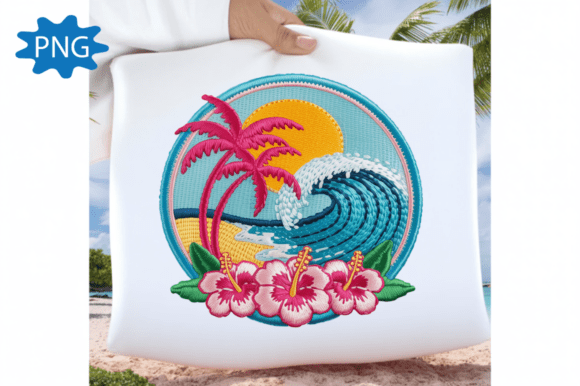
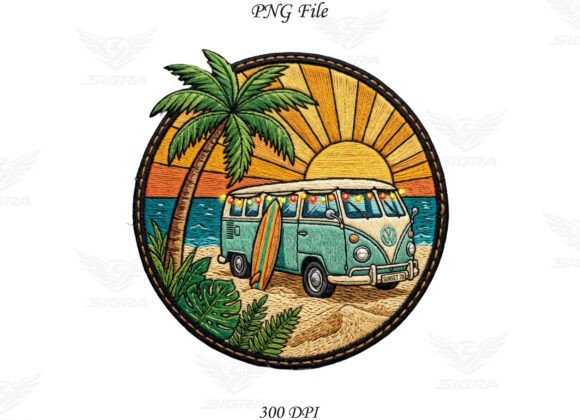
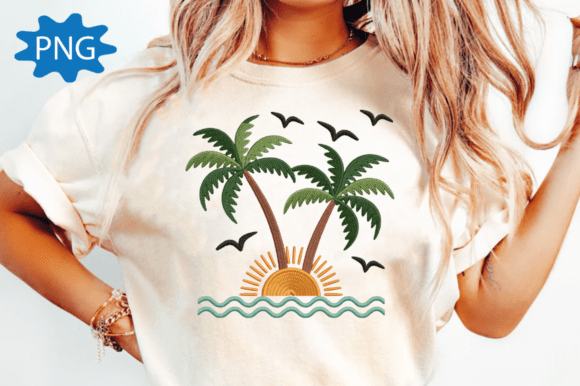
As an embroidery designer who’s stitched everything from boutique baby blankets to limited-run boutique sweatshirts, I opened Tropical Palm Tree Machine Embroidery expecting a cheerful motif—but what stood out immediately was its thoughtful balance of simplicity and character. It doesn’t try to be hyper-realistic; instead, it leans into clean lines, rhythmic leaf curves, and subtle layering that reads beautifully at 3–4 inches tall. This isn’t just a graphic—it’s a machine embroidery design with stitching personality: satin-stitched trunks, gently tapered leaf veins in running stitch, and airy fill-stitch fronds that avoid heaviness. Visually, it evokes vacation vibes without leaning into cliché—making it equally at home on a linen kitchen towel or a cotton-poplin baby blanket.
Where This Design Naturally Fits—And Where It Shines
Tropical Palm Tree Machine Embroidery thrives where handmade charm meets intentional design. I tested it across several real-use scenarios: a natural canvas tote bag (60% cotton/40% polyester), a midweight French terry sweatshirt, and a 100% cotton apron. On the tote, the design held crisp edges without puckering—even with minimal tear-away stabilizer. On the sweatshirt, I added light cutaway backing beneath the hoop, and the palm’s open fill areas stayed breathable and soft to the touch. For the apron, I resized it slightly (to ~3.75″ wide) and found the proportions held up beautifully—no distortion in the trunk taper or leaf curvature.
It also translated well to curved surfaces: when stitched on a structured cotton cap (using a cap frame and basting spray), the topmost leaves retained definition without excessive thread buildup. That’s rare for a design with this much organic flow—and speaks to smart digitizing. As a digital embroidery file, it avoids dense, overworked zones. There are no tiny lettering elements or micro-details that would vanish on knit fabric or blur after washing—so it’s inherently more durable than many tropical-themed T-Shirt Designs repurposed for embroidery.
Practical Considerations for Commercial & Handmade Use
If you’re sourcing Creative Fabrica embroidery assets for Etsy listings, craft fairs, or small-batch apparel, here’s what matters most about Tropical Palm Tree Machine Embroidery:
- Hoop size & scalability: It fits comfortably in a 4×4 hoop at default size—ideal for patches, pillow covers, and baby onesies. Resize with caution below 2.5″; leaf tips may lose definition.
- Stitch density: Moderate overall. The trunk uses tighter satin stitch (as expected), but fronds rely mostly on open fill and running stitch—reducing bulk on stretchy or textured fabrics like jersey or terry cloth.
- Fabric compatibility: Performs reliably on stable weaves (cotton, linen, poplin). On dark fabric, contrast depends entirely on your thread choice—test light olive, sand, or cream against navy or charcoal to preserve detail. Avoid ultra-sheer fabrics unless backed heavily.
- Wash durability: Because it avoids excessive underlay and overly dense fills, it holds up well through repeated gentle cycles—key for kitchen towels, baby items, and personalized gifts meant to last.
How It Elevates Your Finished Product
This isn’t just about stitching a palm tree—it’s about how Tropical Palm Tree Machine Embroidery affects perception. On a handmade tote, it adds instant visual warmth and intentionality—customers notice the clean negative space around the trunk, the slight variation in leaf angles, the absence of “clip-art stiffness.” That builds trust in your craftsmanship. For nursery decor or baby blankets, its organic rhythm feels soothing and gender-neutral—unlike busier tropical bundles that overwhelm small-scale items. And for boutique merchandise? It pairs effortlessly with minimalist branding: think one centered palm on a cream sweatshirt, or a trio of scaled-down versions along a pillow cover hem.
Photography benefits, too. Its balanced light-and-shadow play (built into the stitch direction and fill angles) gives dimensionality even in flat-lay shots—no heavy editing needed. That’s invaluable when creating printable mockups for Etsy listings or social media. Plus, because it’s not tied to typography or seasonal slogans, it stays relevant year-round—making it a versatile addition to your design assets library.
Smart Next Steps Before You Stitch
Before committing to a customer order or production run, take these practical steps:
- Test on scrap fabric that matches your final substrate—especially if using blends, knits, or textured weaves.
- Check thread color contrast on both light and dark fabric swatches. Some greens read flat on black; others pop unexpectedly.
- Review stitch density visually in your embroidery software—if your machine allows preview, look for tight clusters near the base of fronds or trunk junctions.
- Confirm hoop size requirements and whether resizing will trigger re-hooping (some versions may need a 5×7 for larger interpretations).
- Inspect small details post-stitch: Are leaf tips sharp? Does the trunk edge stay smooth? A quick press with low-heat steam often lifts minor tension quirks.
- Verify licensing terms on the Creative Fabrica product page—especially if selling finished embroidered goods commercially. While described as Graphics and T-Shirt Designs, confirm permitted use for physical products before listing on Etsy or wholesale channels.
Final Thought: A Thoughtful, Flexible Embroidery Asset
Tropical Palm Tree Machine Embroidery won’t replace complex applique designs or photorealistic motifs—but it doesn’t aim to. What it delivers is reliable, joyful, and quietly sophisticated: a machine embroidery design built for real-world wear, repeat stitching, and consistent presentation. Whether you’re embroidering custom apparel for a beachside boutique, assembling handmade gifts for a summer craft fair, or building a cohesive line of nursery decor, this design earns its place—not as filler, but as a foundational embroidery file with quiet confidence. It reminds us that sometimes, the most effective design choices are the ones that stitch cleanly, photograph warmly, and feel unmistakably handmade.