Firequacker Embroidery Design
A Goose That Quacks With Purpose—Not Just Gags
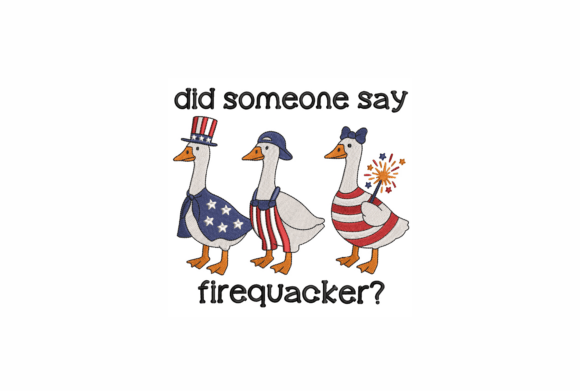
Let’s be real: holiday embroidery designs often fall into two camps—overly earnest or painfully forced. The Firequacker Embroidery Design lands somewhere refreshingly in between. When I first opened the file, I didn’t see a patriotic cliché—I saw three geese, plump and expressive, wearing tiny stars-and-stripes accessories, mid-quack, with a playful “DID SOMEONE SAY FIREQUACKER” banner looping beneath them. It’s clever, not cringey. Whimsical, not childish. And crucially—it reads clearly at 3.5 inches wide on a tote bag mockup, which is where I tested it first.
What It Actually Does Well (and Where It Shines)
I stitched the Firequacker Embroidery Design onto a medium-weight cotton canvas tote for a local boutique’s July 4th pop-up. The layout held up beautifully: the geese are spaced to avoid stitch crowding, the banner text uses clean, bold lettering with generous kerning, and the overall shape fits comfortably within a 4x4 hoop—no awkward trimming or repositioning needed. As a machine embroidery design, it balances satin stitch outlines (on beaks, wings, and star motifs) with open fill stitch areas that breathe well on fabric. No dense, muddy patches. No thread nesting in tight corners.
It works especially well for custom apparel where personality matters—think unisex sweatshirts for a small-town fireworks committee, or baby onesies for a craft fair booth. The humor lands gently: families chuckle, kids point, grandparents ask, “Is that *our* goose?” That kind of warmth translates directly into perceived value. A customer isn’t just buying a holiday embroidery—they’re buying a story they can tell while carrying their tote or gifting that onesie.
Where to Use It—And Where to Pause
The Firequacker Embroidery Design thrives on stable, low-stretch surfaces: tea towels, denim jackets, structured aprons, pillow covers, and twill caps (with proper cap framing). It holds up nicely on medium- to heavyweight fabrics when paired with tear-away + light cutaway stabilizer—especially important under the banner text, where running stitch anchors keep letters crisp.
But here’s where judgment matters: skip it on thin jersey tees unless you’re using heavy stabilizer and reducing stitch density manually. Avoid it on highly textured fabrics like bouclé or thick terry cloth—the geese’s facial details (tiny eyes, subtle beak highlights) get lost. And don’t force it into a 3x3 hoop without checking the file’s native dimensions first; compressing the banner text risks legibility loss, especially in dark thread on dark fabric.
Also worth noting: the design leans into charm over realism. That’s intentional—and smart. You won’t mistake these geese for wildlife photography, but you *will* recognize them instantly as friendly, festive, and handmade in spirit. That consistency builds trust, especially for Etsy sellers curating a cohesive holiday embroidery collection.
Design Assets That Feel Like Partners, Not Props
As someone who reviews dozens of digital embroidery files each month, I pay close attention to how a design behaves *beyond* the hoop. The Firequacker Embroidery Design scales cleanly—tested at 2.75”, 4”, and 5.25”—without jagged edges or collapsed letterforms. That flexibility makes it viable for embroidered patches (heat-seal backing), baby embroidery (smaller size on bibs), and even printable mockups for social media listings. Its visual rhythm—rounded shapes, balanced negative space, clear hierarchy between image and text—makes it easy to brand consistently across product photos.
For craft business owners, that means less time editing mockups and more time shipping orders. For handmade product creators, it means fewer customer questions about “what does this say?”—because the lettering is readable, even in thumbnail size.
Practical Designer Notes Before You Stitch
- Always test on scrap fabric first—especially if pairing with textured or dark materials. Thread color contrast makes or breaks readability.
- Review stitch density in your embroidery software. If your machine struggles with dense fills, reduce density by 5–8% in the geese’s bodies—not the outline or text.
- Confirm hoop size compatibility before listing on Etsy or bundling into a digital embroidery file pack. Don’t assume “4x4” fits all machines equally.
- Inspect small details at actual size: those tiny star accents on the geese’s hats? They’re 1.2mm wide—fine on stable fabric, but vanish on stretchy knits.
- Test black-and-white mockups to assess silhouette strength. This design passes—its shape reads even without color.
- Check licensing terms carefully. If selling finished products (like embroidered sweatshirts), confirm commercial use is permitted. If reselling the embroidery file itself, verify redistribution rights.
Final Thought: Humor That Stitches Cleanly
The Firequacker Embroidery Design doesn’t try to be everything. It’s not a complex applique design. It’s not meant for fine linen heirlooms or corporate branding. But for what it is—a lighthearted, well-constructed Independence Day embroidery—it delivers with quiet confidence. It stitches reliably, photographs warmly, and invites engagement without demanding attention. In a crowded market of holiday embroidery, that balance—of clarity, charm, and craftsmanship—is rare. And honestly? That’s why I’ll reach for it again next summer, stitching geese onto another batch of tote bags, knowing exactly how they’ll land: joyful, recognizable, and unmistakably handmade.