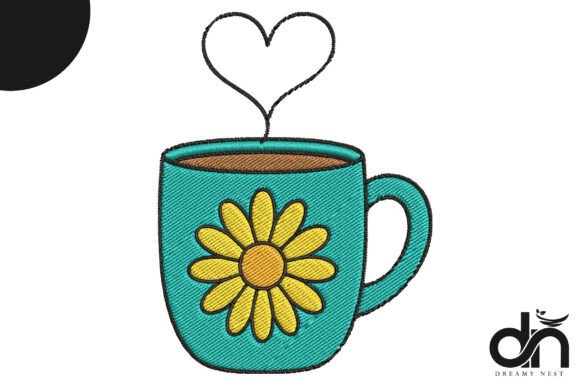
Daisy Coffee Mug Heart Steam Embroidery
First Impression: Whimsical Warmth with Instant Recognition
As an embroidery designer who’s prepped over 200 craft fair booths—from Portland bazaars to Nashville maker markets—I opened the Daisy Coffee Mug Heart Steam Embroidery file and smiled immediately. It reads as whimsical, warm, and effortlessly charming—not overly sweet, not too literal, and definitely not generic. The title alone cues a mood: cozy mornings, handmade gifting, and quiet joy in small rituals. That ☕🌼💖✨ emoji string isn’t fluff—it’s visual shorthand for what buyers *feel* before they even see the stitch file. This isn’t farmhouse rustic or minimalist modern; it’s soft decorative with personality—ideal for small shop products that stand out without shouting.
Where It Shines: Craft Fair & Handmade Market Realities
In a crowded booth full of embroidered totes, tea towels, and aprons, Daisy Coffee Mug Heart Steam Embroidery performs strongest where warmth and narrative intersect:
- Tote bag design: Centered on natural canvas or oat linen, it reads clearly from 6 feet away—friendly, giftable, and instantly relatable. Perfect for “coffee lover” shoppers browsing handmade market bags.
- Apron embroidery: Placed just above the pocket or centered on the bib, it adds gentle focal charm without competing with functional details. Works beautifully on cotton drill or medium-weight denim.
- Tea towel embroidery: On flour-sack or waffle-weave towels, the heart-and-steam motif feels intentional—not busy, not sparse. Paired with neutral thread (cream on ivory, soft grey on oat), it elevates a simple kitchen staple into a curated handmade product.
- Embroidered patch: Sized at 3–4 inches, this design translates cleanly to iron-on or sew-on patches. Great for Etsy sellers bundling with pins or offering customization on denim jackets and canvas pouches.
- Pillow cover & fabric pouch: On linen-cotton blends, the floral heart steam composition balances delicacy and structure—no floating elements, no awkward negative space. Feels intentional, not clip-art.
What Holds It Back (And How to Fix It)
This isn’t a “set-and-forget” machine embroidery design—and that’s a good thing. Its charm comes with practical considerations:
- Stitch density matters: The steam swirl and daisy petals suggest layered fills. Test on scrap fabric first—especially with textured tea towels or thick canvas. Over-stabilizing can mute softness; under-stabilizing risks puckering.
- Small lettering? Not present—but tiny details are: Those delicate daisy centers and curling steam lines shrink fast. Avoid scaling below 2.5 inches wide. On caps or curved surfaces, prioritize placement over size—centered on the front panel works better than low-profile side embroidery.
- Dark fabric needs contrast planning: The design relies on shape and flow—not heavy outlines. Use tonal thread (e.g., charcoal grey on navy) or high-contrast options (white or buttercream on charcoal) to preserve legibility.
- Hoop size & spacing: Check the file’s recommended hoop dimensions. If it’s tight-fitting, batch production slows down. Look for clean jump-stitch paths and logical color-sequence logic—critical when running 30+ tote bags back-to-back.
Selling Power: From Booth to Etsy Listing
At a craft fair, Daisy Coffee Mug Heart Steam Embroidery earns attention because it tells a story in under two seconds: “This is made for someone who savors small joys.” That emotional resonance lifts perceived value—even on a $24 tea towel. As an Etsy seller or boutique maker, pair it with strong printable mockups: flat-lay mugs beside embroidered totes, steam rising *just so*, natural light, linen napkin folds. Customers don’t buy stitches—they buy the feeling of that first sip, wrapped in handmade care.
For commercial embroidery, its repeatable rhythm makes it ideal for limited batches: 12 aprons, 20 patches, 8 pillow covers. No complex gradients or specialty threads required—standard 40-weight rayon or polyester holds up beautifully. And unlike trend-heavy motifs, this design avoids seasonal expiration. It fits spring markets, holiday gift guides, and year-round small shop product lines equally well.
Designer Notes You Can’t Skip
Before cutting fabric or loading hoops:
- Test on scrap fabric—same weight and weave as your final product. Watch how steam lines land on terry cloth vs. smooth cotton.
- Check thread contrast across 3 fabric colors: light, mid-tone, and dark. A single thread palette shouldn’t force compromises.
- Review spacing between mug handle and heart, and between daisy stems and steam curves. Tight gaps may vanish on dense weaves.
- Confirm hoop size compatibility with your machine and frame setup—especially if using multi-position hoops for faster batch runs.
- Inspect stitch density in petal clusters and steam curls. High-density fills on textured towels need tear-away + cut-away stabilizer combos.
- Create at least one real mockup—not digital. See how it drapes on a tote, how light catches the steam arc, how the heart anchors the composition.
- Compare fabric colors in natural light. What reads “soft cream” on screen may look yellowed on unbleached linen.
- Confirm commercial licensing before selling finished products. This is a digital embroidery file, and rights vary by seller—don’t assume resale permission.
Final Thought: A Quiet Standout in a Loud Marketplace
In a sea of bold typography and maximalist florals, Daisy Coffee Mug Heart Steam Embroidery wins by being quietly confident. It doesn’t need glitter or slogans—it communicates warmth through shape, rhythm, and thoughtful balance. For craft fair sellers, it’s booth-ready charm. For Etsy sellers, it’s evergreen search appeal (“coffee embroidery,” “heart mug design,” “tea towel embroidery”). For embroidery business owners, it’s batch-friendly, emotionally resonant, and consistently delightful to stitch. Just remember: its softness is intentional—so treat it with the same care you’d give a hand-poured latte. Warm, intentional, and unmistakably handmade.